October 31, 2026 · 7 min read
Gravel Calculator: How Much Gravel You Need in Tons and Yards
Gravel calculator guide with the real math: cubic yards = length x width x depth / 27, tons per yard by gravel type, depth chart, 2026 cost ranges, and a full driveway worked example.
Ordering gravel without doing the math first is how you end up paying for two deliveries instead of one. The supplier will happily sell you whatever number you blurt out, and "about three tons" said with confidence is still a guess. The good news is the actual math takes about ninety seconds, and once you know it you will never over order or run short again.
This guide walks through the full calculation: area, depth, cubic yards, tons, the compaction allowance everyone forgets, and what it should cost in 2026. If you just want the number, our mulch calculator uses the same volume formula and will do it for any bed size in seconds, but read the depth section first because depth is where most people go wrong.
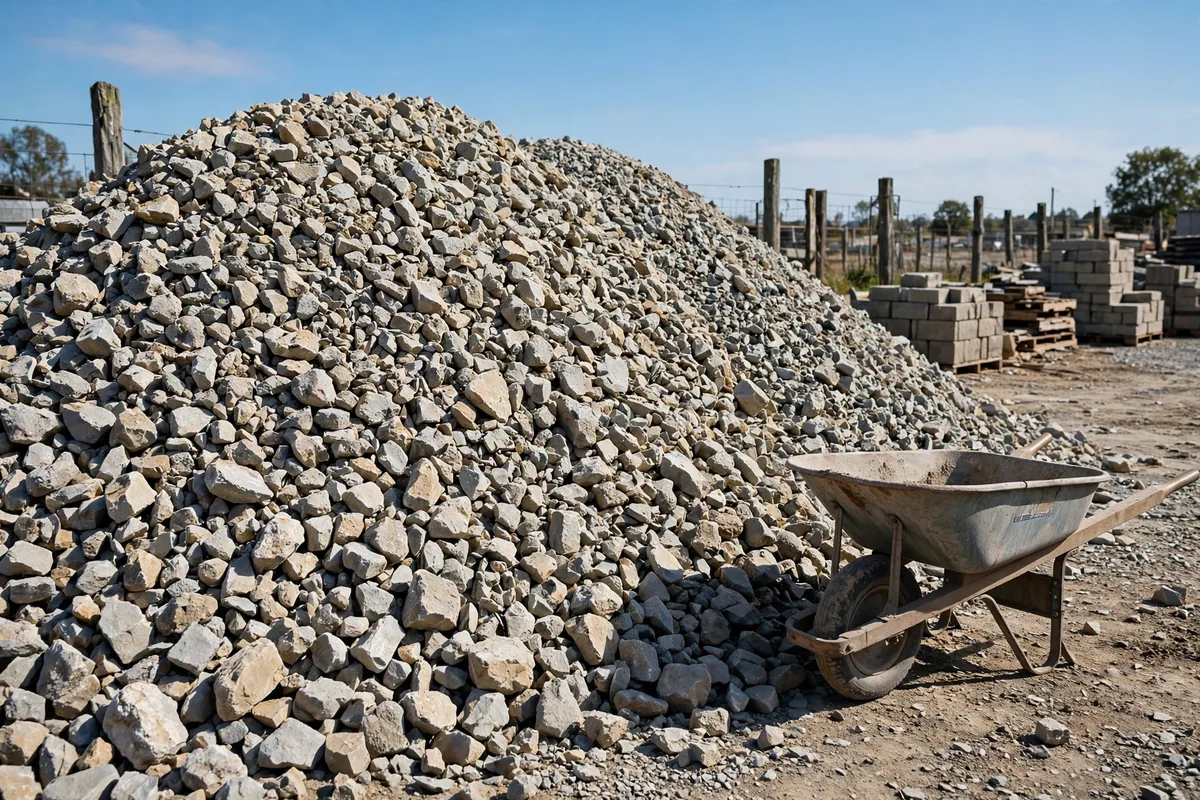
How the gravel math works
Everything starts with volume. Measure the length and width of your area in feet, pick a depth in inches, and run this:
Cubic feet = length x width x (depth / 12)
Cubic yards = cubic feet / 27
Tons = cubic yards x density
The density depends on the gravel type, because a yard of crushed stone weighs more than a yard of pea gravel. Use these figures:
Crushed stone and crusher run: about 1.4 tons per cubic yard Pea gravel: about 1.35 tons per cubic yard River rock: about 1.35 tons per cubic yard Crushed concrete: about 1.35 tons per cubic yard
Suppliers usually sell and price by the ton even when you talk in yards, so the tonnage is the number that drives your cost. Always confirm the tons per yard figure with your quarry before a large order, because density varies with stone size, gradation, and moisture, and a wrong assumption scales across the whole job.
One more step that is not optional: the compaction allowance. Loose gravel loses volume when it gets compacted. Add 10 to 20 percent over your calculated volume so the finished depth is what you specified after rolling, not before. For a driveway base, use the full 20 percent. For a decorative path, 10 percent is fine.
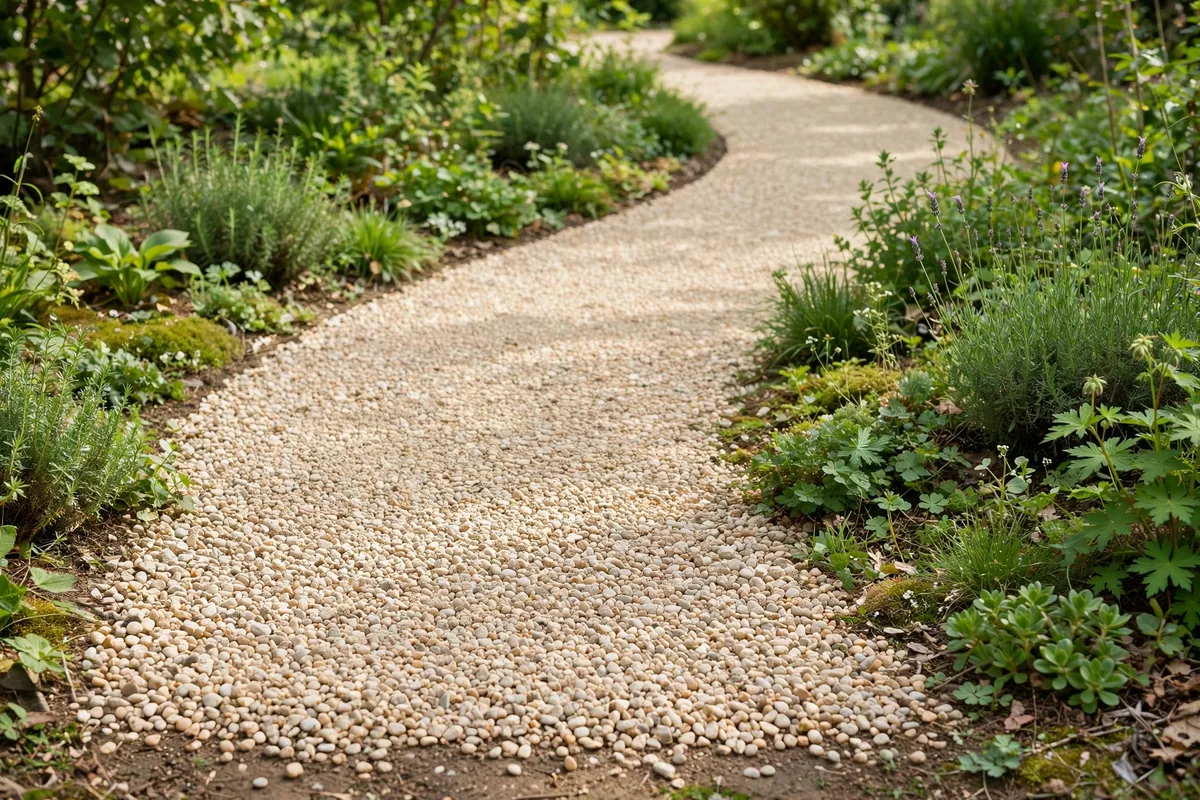
How deep for each project
Depth is the number people guess at, and guessing deep wastes money while guessing shallow gives you a driveway that ruts in the first rain. Use this chart:
Garden paths and walkways: 2 to 3 inches Patios and seating areas: 4 inches Shed bases: 4 inches Driveways: 4 to 6 inches of compacted base, built in lifts rather than one deep pour French drains: 6 to 12 inches around the pipe, depending on the design
For a driveway, do not dump 6 inches at once and compact from the top. That leaves voids underneath that settle later. Lay it in 2 to 3 inch lifts and compact each one. It takes longer and it is the difference between a driveway that lasts and one you are topping up every spring.
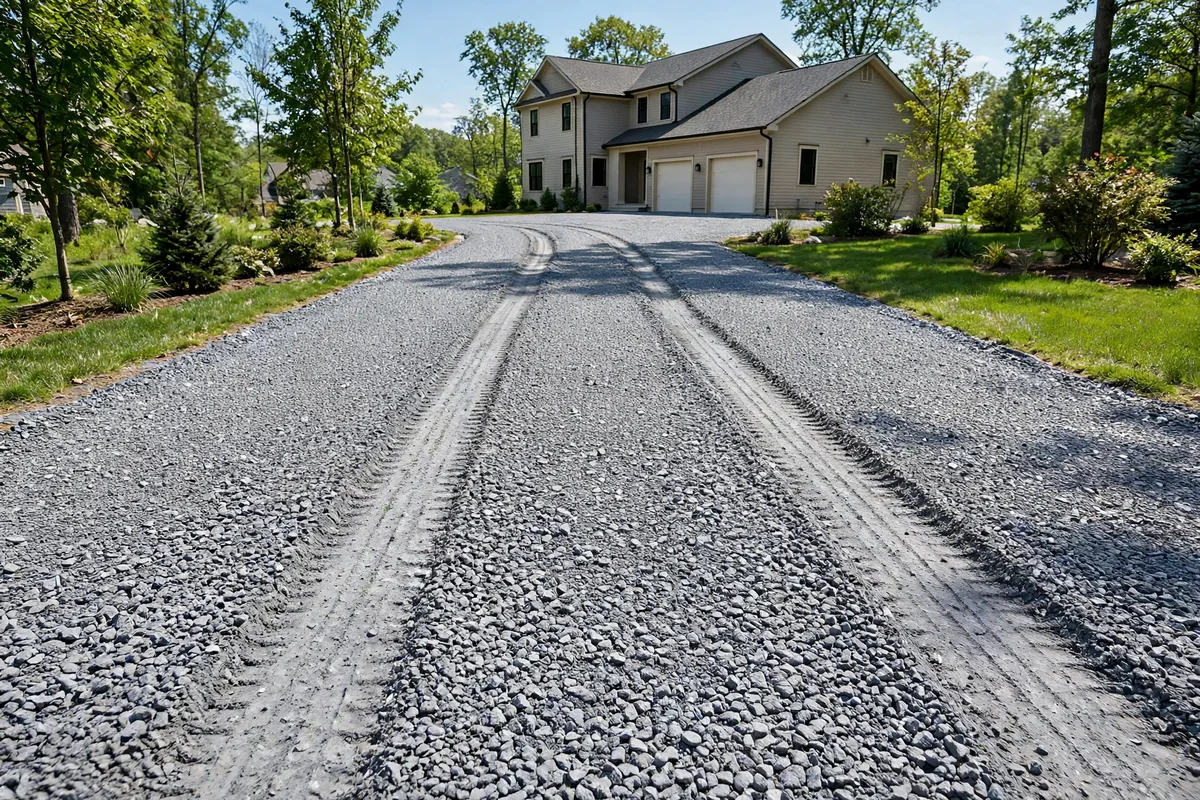
Worked example: a 20 by 12 foot driveway at 4 inches
Let us run a real one. A single car driveway, 20 feet long and 12 feet wide, with 4 inches of crushed stone base.
Area: 20 x 12 = 240 square feet Depth in feet: 4 / 12 = 0.333 feet Cubic feet: 240 x 0.333 = 80 cubic feet Cubic yards: 80 / 27 = 2.96 cubic yards Tons: 2.96 x 1.4 = 4.15 tons With 10 percent compaction allowance: 4.15 x 1.10 = 4.56 tons, so order 5 tons
At a typical 2026 price of about 45 dollars a ton for crushed stone, 5 tons runs 225 dollars for material. Add delivery, usually 50 to 100 dollars a load in most markets, and the full job lands around 300 dollars before any edging or landscape fabric. That is the whole estimate, built from measurements instead of vibes.
Tons versus cubic yards: which number the supplier wants
Ask. Some quarries quote by the ton, some by the yard, and some will cheerfully give you a price per yard that assumes a density you did not agree to. The safe move is to compute both numbers, then ask the supplier which unit they bill in and what density they assume. If their tons per yard figure differs from yours by more than a tenth or two, ask why before you pay. On a 20 ton order, a 0.2 difference in assumed density is 4 tons of gravel you either overpaid for or never received.
What gravel costs in 2026
Prices move with diesel and distance from the quarry, so treat these as typical US ranges and get a local quote before committing:
Crushed stone: 35 to 55 dollars per ton Pea gravel: 30 to 50 dollars per ton River rock: 45 to 80 dollars per ton, decorative grades higher Crusher run: 30 to 45 dollars per ton, usually the cheapest structural option Delivery: 50 to 150 dollars per load, often free above a minimum tonnage
Bagged gravel from a home center runs 4 to 7 dollars per half cubic foot bag, which works out to roughly 200 dollars or more per cubic yard. Bags make sense for a small repair. For anything over half a yard, bulk delivery is dramatically cheaper, and this is the same bags versus bulk math we worked through in our how much mulch guide, just with heavier material.
Mistakes that cost real money
Ordering the exact calculated amount with no allowance. You will compact it, it will settle, and you will be a quarter ton short with the truck already gone. Always round up to the next half ton at minimum.
Using pea gravel where you need crushed stone. Pea gravel is round and smooth, which looks lovely and migrates everywhere. It does not lock together under load, so it is a poor driveway surface. Crushed stone has angular faces that knit together when compacted. Use the right stone for the job, not the prettiest one.
Skipping the base on a driveway. Four inches of gravel dumped on soft soil becomes gravel mixed into soft soil within a year. Compact the subgrade, lay landscape fabric if the soil is clay, then build your lifts. The fabric and the compaction are cheap insurance on a 300 dollar material order.
Forgetting to subtract. If the driveway has a concrete pad section or a planting bed cutting through it, measure each rectangle separately and subtract what you are not covering. Our concrete driveway cost guide is worth a read if you are deciding between gravel and concrete for the same area, since the comparison only makes sense when both estimates use real measurements.
Quick reference numbers
All figures below use crushed stone at 1.4 tons per yard with a 10 percent allowance, rounded up to sensible order sizes:
10 by 10 foot path at 3 inches: 0.93 cubic yards, order 1.5 tons 12 by 12 foot patio at 4 inches: 1.78 cubic yards, order 3 tons 20 by 12 foot driveway at 4 inches: 2.96 cubic yards, order 5 tons 24 by 20 foot driveway at 6 inches: 8.89 cubic yards, order 14 tons
Frequently asked questions
How many tons are in a cubic yard of gravel? About 1.4 tons for crushed stone and about 1.35 tons for pea gravel and river rock. Confirm with your supplier, since gradation and moisture shift the number.
How deep should gravel be for a driveway? Four to six inches of compacted base, built in two to three inch lifts. Anything shallower ruts under vehicle weight, and anything dumped in one lift settles unevenly.
Can I use pea gravel for a driveway? You can, but it performs poorly. The round stones do not interlock, so tires push them aside and you end up raking constantly. Crushed stone or crusher run is the right pick for anything cars drive on.
How much does a ton of gravel cover? At 4 inches deep, one ton of crushed stone covers roughly 55 to 60 square feet. At 2 inches deep it covers about 110 to 120 square feet. Depth is doing all the work in that number, which is why the formula matters more than any rule of thumb.
Is delivered gravel cheaper than bags? Dramatically, for anything over half a cubic yard. Bagged gravel can cost four to five times more per yard than bulk. Bags are for patching and tiny beds only.
Do I need landscape fabric under gravel? On clay soil or anywhere weeds are aggressive, yes. It keeps the stone from sinking into the mud and the weeds from coming up through it. On well drained sandy soil for a simple path, you can skip it.
Skip the math next time
Our free Paint Calculator does all of this instantly — gallons, liters, and cost.
Try the Paint Calculator →