October 31, 2026 · 7 min read
Sod Calculator: How Much Sod You Need in Rolls and Pallets
Sod calculator guide with the real math: rolls = area / 10, pallets = area / 450, waste allowances, 2026 sod cost per square foot, and a full lawn worked example.
Sod is the fastest way to get a real lawn, and the easiest material to misorder. Order too little and the crew is standing around while you beg the farm for a second delivery of a perishable product. Order too much and you have paid for pallets of grass that will be dead by the weekend. The math that prevents both outcomes is simple, and it fits in four steps.
This guide covers exactly how sod is sold, the roll and pallet math, how much waste to add, what sod costs in 2026, and a full worked example for a typical suburban lawn. No guesswork, no rules of thumb that quietly assume your yard is a perfect rectangle.
How sod is sold
Sod comes in two units, and you need to know both because farms quote in pallets while your lawn is measured in square feet.
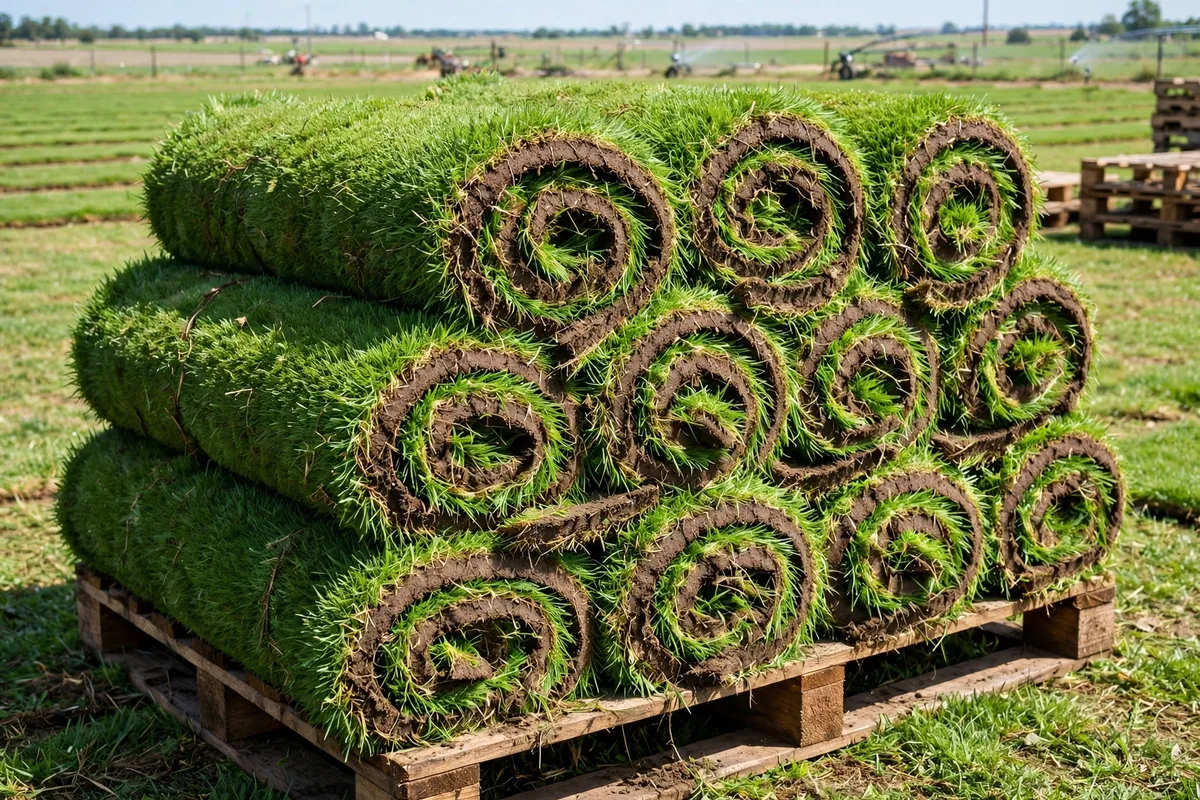
The standard US retail roll is 2 feet wide by 5 feet long, which covers exactly 10 square feet. Some growers sell smaller slabs, often around 16 by 24 inches, and St. Augustine is commonly sold in 16 inch by 81 inch pieces that cover about 9 square feet. The piece size changes the piece count but never changes the total area you need, so always work from square footage first.
The pallet is the delivery unit. A standard pallet holds about 45 rolls and covers roughly 450 square feet, though the real range is 400 to 500 square feet depending on the grower and the grass type. Always confirm the exact coverage per pallet with your supplier before ordering, because a 10 percent difference in pallet size changes your pallet count by a full pallet on a big lawn.
The sod math, step by step
Step one, measure the lawn in square feet. For a rectangle, multiply length by width. For L shapes, split the lawn into rectangles, measure each, and add them together. For curved edges, measure the rectangle that contains the curve and let the offcuts be part of your waste allowance. And subtract everything you are not sodding: the driveway, walkways, patios, planting beds, and the shed footprint. People forget the beds and then wonder why they have two pallets left over.
Step two, divide by the roll coverage. Area in square feet divided by 10 gives you the exact fit roll count for standard 2 by 5 foot rolls.
Step three, add waste. Sod gets cut around beds, trees, curves, and edges, and cutting produces offcuts you cannot reuse. Add 5 percent for a clean rectangle. Add 10 percent for an irregular lawn with curves and obstacles. Sod is perishable and cannot be reordered casually, so when you are between percentages, round up.
Step four, convert to pallets. Take your waste adjusted square footage and divide by the pallet coverage, usually 450, then round up to the next whole pallet. On the remainder, remember you can buy individual rolls, so a result of 2.2 pallets means two full pallets plus a handful of rolls, not three full pallets unless delivery minimums push you there.
Worked example: a 40 by 30 foot lawn
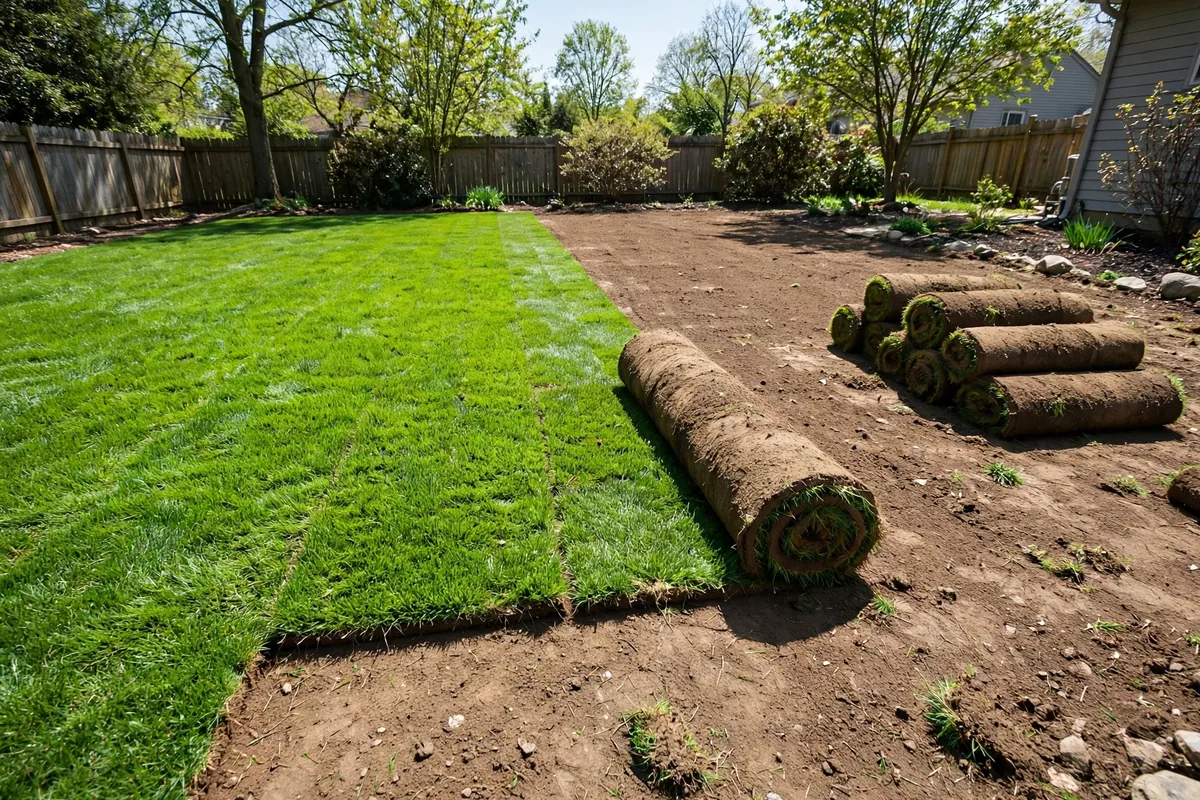
A classic suburban front lawn, 40 feet by 30 feet, mostly rectangular with one curved planting bed.
Measure: 40 x 30 = 1,200 square feet Rolls: 1,200 / 10 = 120 rolls, exact fit Waste: the curved bed means 10 percent, so 120 x 1.10 = 132 rolls Square feet with waste: 132 x 10 = 1,320 square feet Pallets: 1,320 / 450 = 2.93, so order 3 pallets
Three 450 square foot pallets deliver about 1,350 square feet, which covers the 1,320 you need with a few spare rolls for patching later. At a mid range material price of 50 cents per square foot, the sod itself costs 1,320 x 0.50 = 660 dollars. Delivery is usually 75 to 150 dollars on top, and many farms waive it above a minimum pallet count.
What sod costs in 2026
Material cost per square foot, typical US ranges:
Bermuda: 35 to 85 cents Zoysia: 40 to 90 cents St. Augustine: 35 to 80 cents Kentucky bluegrass: 50 cents to 1 dollar Tall fescue: 45 to 90 cents
Per pallet of 400 to 450 square feet, expect 250 to 450 dollars depending on grass type, with premium cultivars at the top of the range. If you hire a crew to prep the soil and lay it, add roughly 1 to 2 dollars per square foot for labor, which means a professionally installed lawn often costs double the material price. That installed figure is the one to budget against if you are not doing the work yourself.
Mistakes that kill new sod
Laying it on unprepared soil. Sod needs soil contact to root, and compacted, debris covered dirt is not soil contact. Clear the area, till 2 to 4 inches deep, rake it level, and amend with compost or topsoil if the existing ground is poor. Skipping prep is the most common cause of failed sod, and no amount of watering fixes roots that never touched soil.
Letting pallets sit. Harvested sod is a living product with the clock running. Lay it the day it arrives, or the morning after at the latest, and keep stacked pallets in the shade, not baking on the driveway. If delivery is delayed, delay the delivery, not the laying.
Butting, not overlapping. Lay pieces edge to edge like tiles, stagger the seams like brickwork, and cut the edges with a sharp knife or edger. Overlapping creates ridges that brown out, and gaps let the edges dry and shrink.
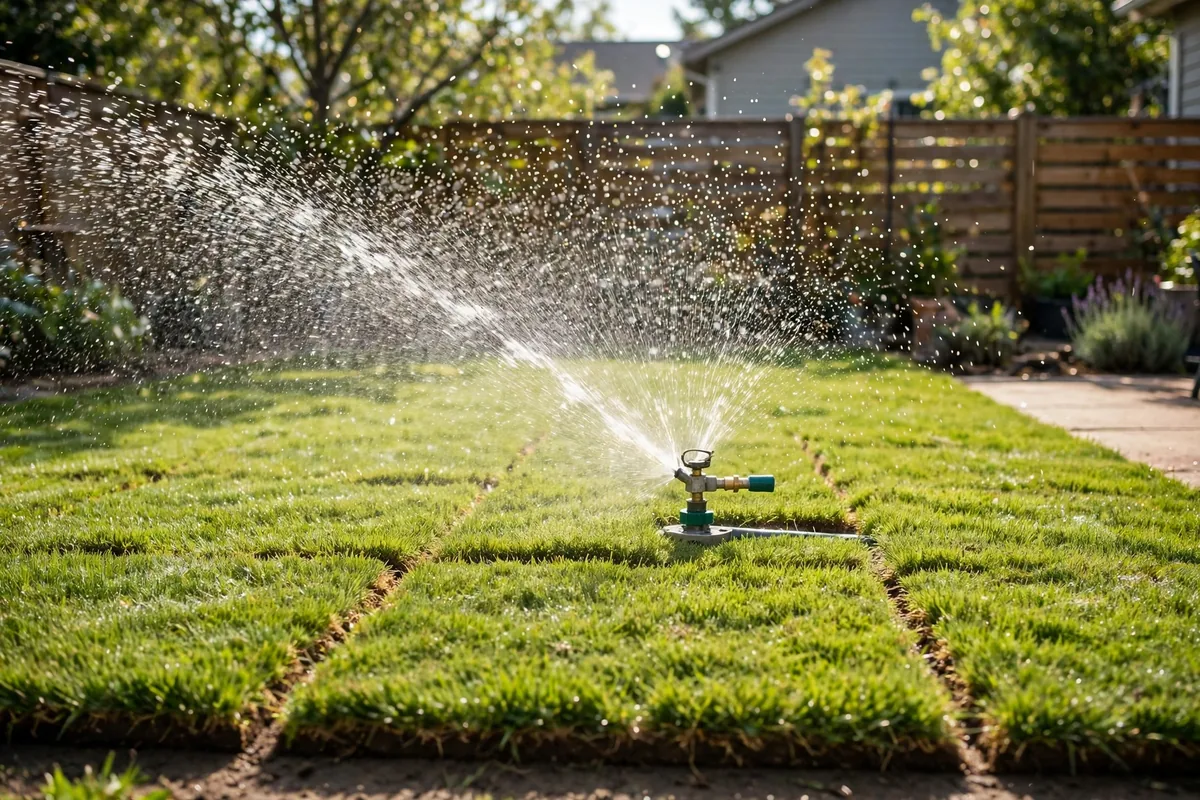
Watering wrong. New sod needs consistent moisture for the first two weeks, usually daily watering that soaks the top inch of soil, then a taper as roots establish. Drowning it is nearly as bad as ignoring it. If you can lift a corner after a week and see white roots reaching into the soil, you are on track.
Quick reference numbers
Using standard 10 square foot rolls, 450 square foot pallets, and 10 percent waste:
500 square foot lawn: 55 rolls, 1.2 pallets, order 1 pallet plus 10 rolls 1,000 square foot lawn: 110 rolls, 2.4 pallets, order 2 pallets plus 20 rolls 2,000 square foot lawn: 220 rolls, 4.9 pallets, order 5 pallets 5,000 square foot lawn: 550 rolls, 12.2 pallets, order 13 pallets
For the beds you subtracted from the lawn area, remember they need mulch, not sod. Our how much mulch guide covers the same kind of volume math for beds, and the mulch calculator will give you yards and bags for any bed size. And if you are measuring the driveway to subtract it, our concrete driveway cost guide will tell you what that slab is worth while you are at it.
Frequently asked questions
How many rolls of sod are on a pallet? About 45 standard rolls on a 450 square foot pallet. The real range is 40 to 50 rolls because pallet coverage varies from 400 to 500 square feet by grower. Confirm with your farm.
How big is a roll of sod? The standard US roll is 2 feet by 5 feet, covering 10 square feet, and typically weighs 30 to 45 pounds depending on moisture. Wet sod is dramatically heavier than dry sod, which matters if you are carrying it yourself.
How much waste should I add? Five percent for a simple rectangle, 10 percent for irregular shapes with curves, beds, or trees. Cutting sod always produces offcuts, and running short on delivery day is far more expensive than a few spare rolls.
Can I lay sod over existing grass? Not well. The old grass blocks soil contact, the sod roots into thatch instead of soil, and the result is a lawn that struggles from day one. Strip or kill the old grass, prep the soil, then lay.
How soon after laying should I water? Immediately. Water each section as you finish it rather than waiting for the whole lawn, especially on a hot day. Then keep it consistently moist for two weeks while roots establish.
How long does sod take to root? Usually 2 to 3 weeks for initial rooting in good conditions, with full establishment taking a full growing season. Avoid heavy foot traffic for the first few weeks and hold off mowing until the grass is about a third taller than your target height.
Skip the math next time
Our free Paint Calculator does all of this instantly — gallons, liters, and cost.
Try the Paint Calculator →