October 31, 2026 · 7 min read
Topsoil Calculator: How Much Topsoil You Need in Yards and Bags
Topsoil calculator guide with the real math: cubic yards = length x width x depth / 27, depth chart for gardens and lawns, screened vs unscreened, 2026 bulk and bagged prices, and a full bed worked example.
Topsoil is the least glamorous material in the garden center and the one most worth getting right. Too little and your plants sit in compacted subsoil with their roots going nowhere. Too much and you have paid for a mountain of dirt that is now your problem to move. The calculation is the same volume formula used for mulch and gravel, with topsoil specific depths and one extra decision: screened or unscreened, bulk or bagged.
This guide walks through the full math, the depth chart for every common project, what topsoil costs in 2026, and a worked example for a standard raised garden bed. If you want the number without the reading, the volume formula below is all you need, and our mulch calculator runs the identical cubic yard math for any bed size.
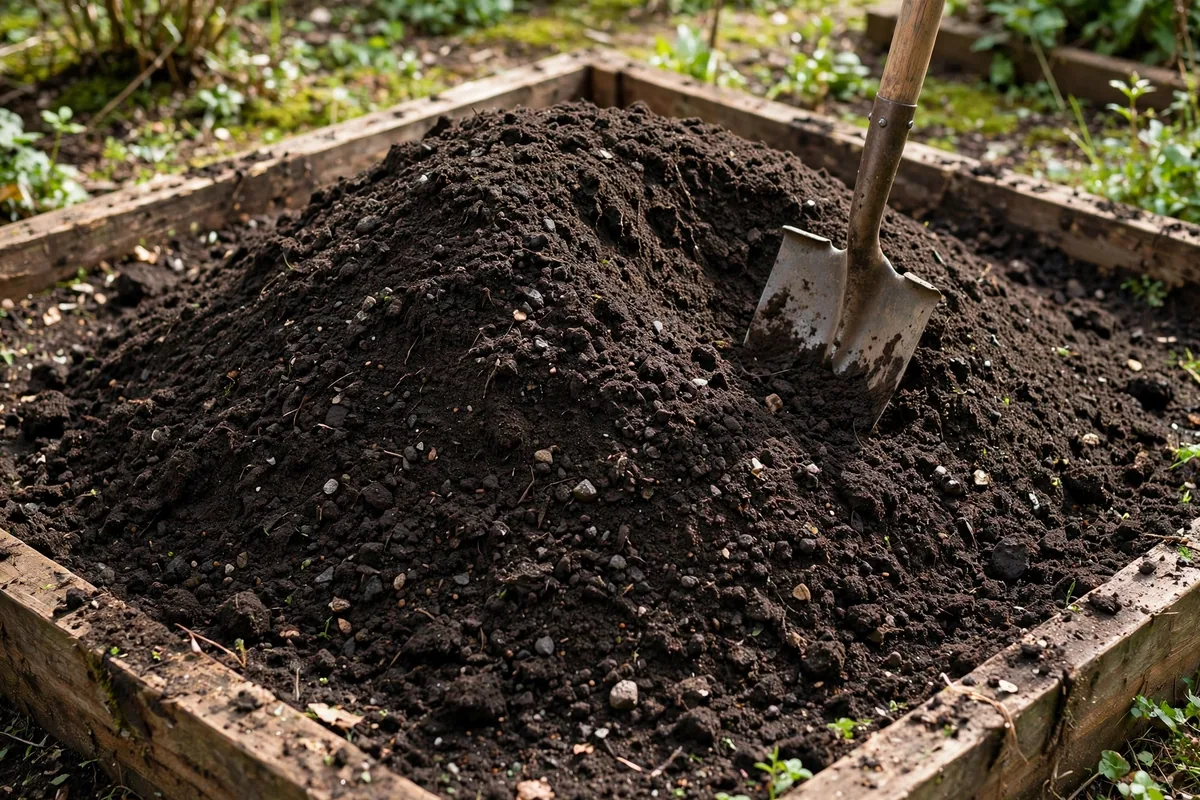
The topsoil math
Measure the bed in feet, choose a depth in inches, and run this:
Cubic feet = length x width x (depth / 12)
Cubic yards = cubic feet / 27
Bags = cubic feet, if you are buying 1 cubic foot bags
One cubic yard of loose topsoil weighs roughly one ton, a little more when wet. That matters for delivery: a pickup truck bed holds about 2 cubic yards, which is around 2 tons, and that is at or over the payload rating of many half ton trucks. For anything over 2 yards, pay for delivery and let their truck do the suffering.
Bag math is where the sticker shock lives. A 1 cubic foot bag covers 1 cubic foot, so 27 bags make a cubic yard before spillage and settling. Most garden center bags are 0.75 or 1 cubic foot, so check the bag, not your memory of the bag.
How deep for each project
Depth depends on what is growing and what is underneath:
New vegetable garden on decent soil: 4 to 6 inches of added topsoil, tilled in Raised beds: 8 to 12 inches of fill, often a topsoil and compost blend New lawns: 4 to 6 inches of quality topsoil over the graded subsoil Topdressing an existing lawn: 1 to 2 inches, no more in one application Flower beds: 3 to 4 inches worked into the existing soil Filling low spots: whatever the spot needs, compacted in layers
One honest note on depth: deeper is not always better. More than 12 inches of fresh topsoil in a raised bed settles significantly in the first season, and a lawn with 8 inches of soft new soil over hard subsoil can develop a perched water table that drowns roots. Match the depth to the project, then stop.
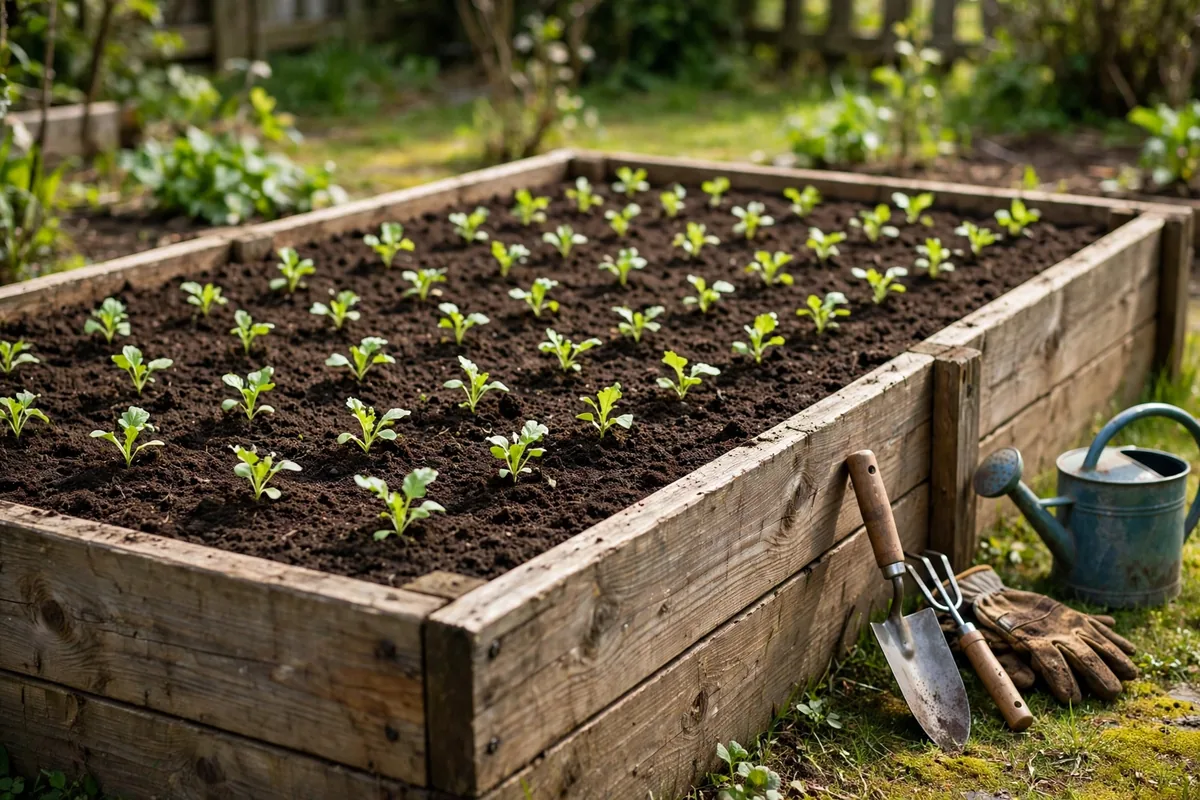
Worked example: a 10 by 8 foot garden bed at 6 inches
A standard backyard vegetable bed, 10 feet long and 8 feet wide, getting 6 inches of fresh topsoil tilled into the existing ground.
Area: 10 x 8 = 80 square feet Depth in feet: 6 / 12 = 0.5 feet Cubic feet: 80 x 0.5 = 40 cubic feet Cubic yards: 40 / 27 = 1.48 cubic yards, so order 1.5 yards In 1 cubic foot bags: 40 bags, plus a few for settling, so 44 bags
Now the price comparison that decides bulk versus bagged. Bulk screened topsoil at 35 dollars a yard: 1.5 x 35 = 52.50 dollars for material, plus roughly 75 dollars delivery, for a total around 128 dollars. Bagged at 4 dollars per cubic foot bag: 44 x 4 = 176 dollars, and you carried all 44 bags yourself. Bulk wins on price and on your back for anything over about a cubic yard. This is the same bags versus bulk crossover we worked through in our how much mulch guide, and the logic holds for every bulk landscape material.
Screened versus unscreened, and the three dirts
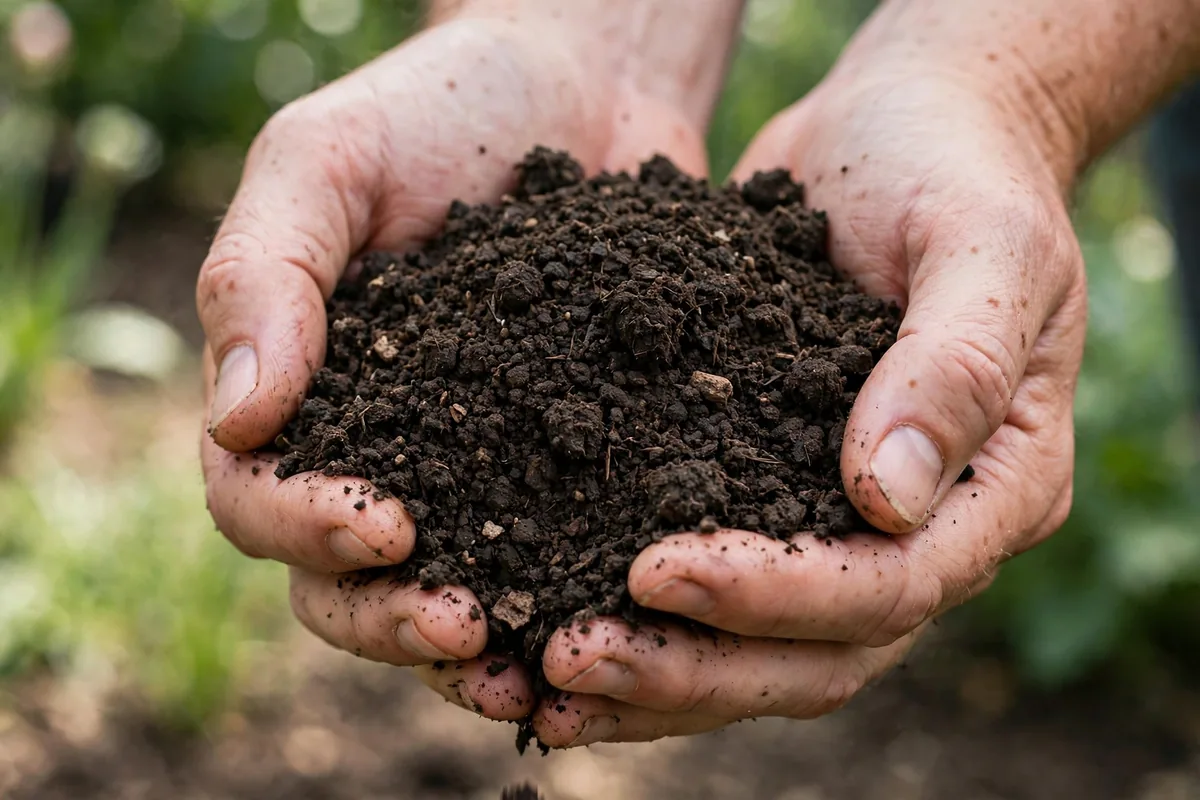
Screened topsoil has been run through a screen that removes rocks, roots, and clods. It costs more, usually 10 to 15 dollars extra per yard, and it is worth it for lawns, garden beds, and anywhere you will be raking or planting directly. Unscreened, sometimes called rough fill grade topsoil, is fine for filling low spots and grading, where nobody will ever see or touch it.
Know which dirt you are buying, because the names get abused:
Topsoil is the upper layer of soil, dark with organic matter, what plants actually grow in. Garden soil or planting mix is topsoil blended with compost and sometimes sand or pine fines, richer and more expensive, sold mostly in bags. Fill dirt is subsoil with almost no organic matter, cheap, for raising grades and filling holes, and terrible for growing anything. If a price looks too good for topsoil, you are probably looking at fill dirt.
What topsoil costs in 2026
Typical US ranges, before you get a local quote:
Bulk unscreened topsoil: 20 to 35 dollars per cubic yard Bulk screened topsoil: 30 to 55 dollars per cubic yard Delivery: 50 to 150 dollars per load, sometimes free over a minimum yardage Bagged topsoil, 1 cubic foot: 3 to 6 dollars per bag Bagged garden soil mix, 1.5 cubic foot: 6 to 10 dollars per bag
Delivery minimums are the hidden variable. Many suppliers have a 3 or 5 yard minimum for free or reduced delivery, which can make a small order oddly expensive per yard. If you need 1.5 yards and the minimum is 3, ask a neighbor if they want a yard. Seriously. Half the street is usually thinking about the same project.
Mistakes worth avoiding
Buying fill dirt by accident. Read the product description, ask what is in it, and be suspicious of any topsoil under 20 dollars a yard. Your tomatoes will tell you the truth one season too late.
Forgetting the settling. Fresh loose topsoil settles 10 to 20 percent in the first season as it compacts and the organic matter breaks down. A raised bed filled exactly to the rim in April sits 2 inches low by August. Overfill slightly or plan a top up.
Spreading topsoil over unbroken subsoil. If the ground underneath is compacted clay, 6 inches of beautiful topsoil on top just makes a beautiful bathtub. Break up the subsoil with a fork or tiller first so water and roots can move between the layers.
Ordering by the truckload without knowing the truck. A "truckload" is not a unit. Ask how many cubic yards the truck holds before you agree to a per load price, because a 5 yard truck and a 10 yard truck at the same per load price are very different deals.
Quick reference numbers
Screened bulk assumed, rounded to sensible order sizes:
4 by 8 foot raised bed at 10 inches: 0.99 cubic yards, order 1 yard or 30 bags 10 by 8 foot garden at 6 inches: 1.48 cubic yards, order 1.5 yards or 44 bags 10 by 10 foot garden at 6 inches: 1.85 cubic yards, order 2 yards or 55 bags 20 by 20 foot new lawn at 4 inches: 4.94 cubic yards, order 5 yards 1,000 square foot lawn topdress at 1 inch: 3.09 cubic yards, order 3.5 yards
Check the arithmetic on that last one: 1,000 square feet at 1 inch is 1,000 x (1/12) = 83.3 cubic feet, divided by 27 = 3.09 yards. Topdressing eats more material than people expect, which is exactly why the formula beats the guess.
The beds you are filling will want mulch on top once planted, and the volume math is identical. Our how much mulch guide covers depth and the bags versus bulk decision for mulch, the mulch calculator gives you yards and bags for any bed, and our concrete volume guide runs the same cubic yard formula for a different material, which is a handy cross check that your arithmetic is right.
Frequently asked questions
How many bags of topsoil are in a cubic yard? Twenty seven 1 cubic foot bags make a cubic yard in theory. In practice, buy 29 to 30 to cover spillage and settling, and check your bag size because many are 0.75 cubic feet, which means 36 bags per yard.
Should I buy screened or unscreened topsoil? Screened for anything you plant in or walk on: lawns, gardens, beds. Unscreened for grading and filling low spots where finish quality does not matter. The price difference is usually 10 to 15 dollars a yard.
How deep should topsoil be for a vegetable garden? Four to 6 inches of good topsoil tilled into the existing soil is the standard. In a raised bed, fill 8 to 12 inches, ideally with a blend of topsoil and compost rather than straight topsoil.
What is the difference between topsoil and garden soil? Topsoil is natural surface soil. Garden soil or planting mix is a manufactured blend of topsoil, compost, and aeration amendments, richer and more expensive. For raised beds the blend is usually worth it; for large areas, buy topsoil and add your own compost.
Can I use topsoil to level my lawn? For minor leveling, yes, in thin applications of half an inch to an inch at a time, letting the grass grow through between applications. For major regrading, that is a bigger project involving proper drainage, not just dirt.
How much does a cubic yard of topsoil weigh? Roughly one ton, about 2,000 pounds, more when wet. This is why delivery exists and why your half ton pickup should not be carrying 3 yards.
Skip the math next time
Our free Paint Calculator does all of this instantly — gallons, liters, and cost.
Try the Paint Calculator →