November 1, 2026 · 8 min read
Drywall Finishing Cost in 2026: Price Per Square Foot by Finish Level
Drywall finishing cost guide: finish levels 0 to 5 explained, 2026 US price ranges per square foot for labor and materials, and a full 12 by 12 room worked example.
Drywall finishing is the invisible half of every drywall job. Hanging the sheets is the part people picture, but taping, mudding, and sanding is where the wall actually becomes a wall. Drywall finishing cost is also where budgets go sideways, because "finish the drywall" can mean anything from a quick tape job in a garage to a glass smooth Level 5 skim coat in a living room, and the price difference between those two is enormous.
This guide explains the finish levels in plain language, gives realistic 2026 US cost ranges per square foot, and works through a full room example so you can see exactly where the money goes. If you are still at the hanging stage, our drywall calculator will total up your sheets, screws, and mud quantities first.
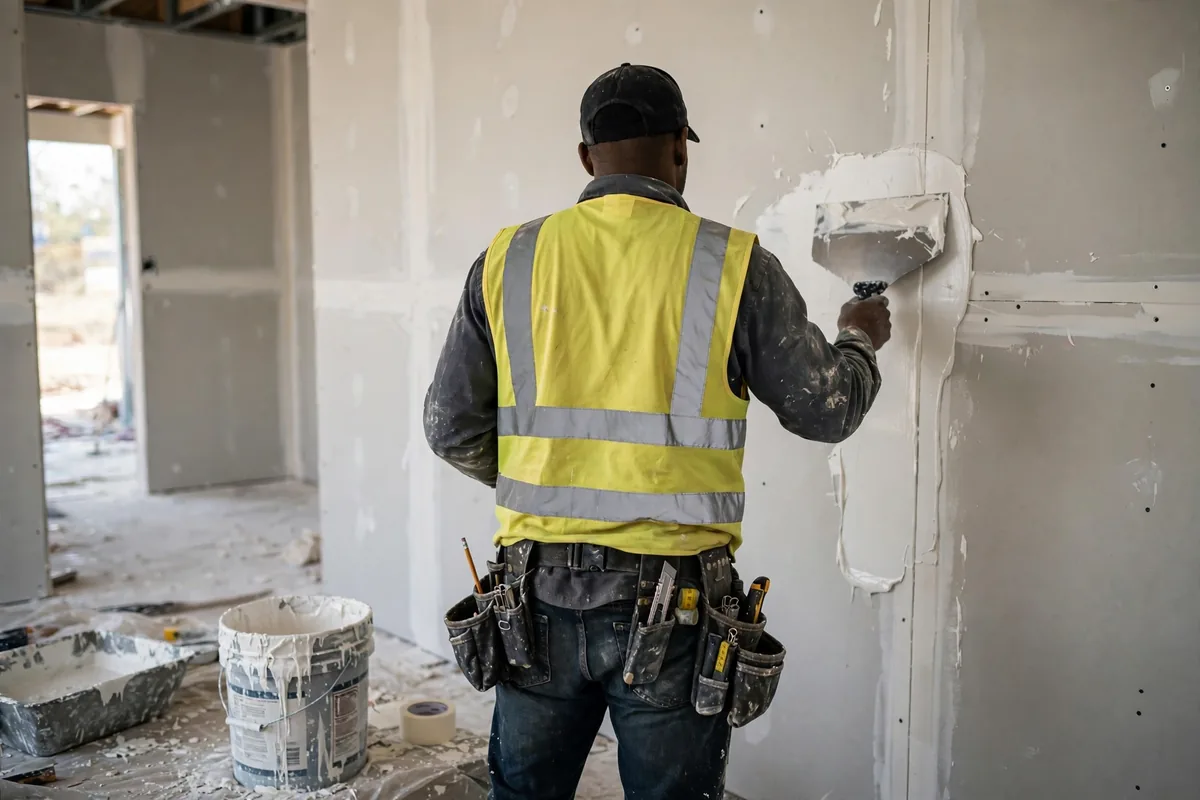
Finish levels 0 to 5, plainly explained
The industry standard drywall finish levels, from the Gypsum Association, define six levels. Here is what each one actually means in a house:
Level 0: no taping, no finishing. Temporary construction or areas that will never be seen.
Level 1: tape set in joint compound, no extra coats. Fire taping in plenums, attics, and service corridors where nobody looks.
Level 2: one additional coat over the tape. Garages, storage rooms, and anywhere getting tile, because tile adhesive hides everything.
Level 3: two coats over the tape, with a skim of compound over fasteners. Heavy texture finishes and commercial spaces. Not meant for smooth paint.
Level 4: the residential standard. Tape plus three coats, fasteners covered, everything sanded smooth. This is what "paint ready" means in a normal home.
Level 5: Level 4 plus a full skim coat over the entire surface. Specified for glossy paint, dark colors, and critical lighting where every flaw shows. The most expensive and the most flawless.
Most homes get Level 4 on walls and ceilings. Level 5 shows up in high end work, rooms with big windows raking light across the walls, and anywhere the homeowner has strong opinions about visible seams.
What drives the price
Finish level is the biggest lever, and it moves drywall finishing labor cost directly. Each step up adds a full coat over every seam, which means more mud, more labor, and more sanding dust in your life.
Ceiling height matters more than people expect. Eight foot ceilings are the baseline. Nine foot and vaulted ceilings slow everything down and often need scaffolding or stilts, which adds labor time on every coat.
Texture versus smooth changes the math. A knockdown or orange peel texture hides minor imperfections, so the finishing underneath can be a step less perfect. Smooth walls, especially with flat or eggshell paint in strong light, show everything and need the full Level 4 treatment.
New work versus repair is a different job entirely. Patching and blending into existing walls is fiddly, dusty, and slow per square foot. Whole room finishing is production work and prices lower per foot.
Region moves the numbers 20 to 40 percent either way. Big coastal cities run hot. Smaller markets and the South run cooler. The ranges below are national typical figures for 2026. Get two local quotes before you commit to anything.
2026 cost ranges per square foot
Treat these as typical US estimates, labor plus materials, for straightforward rooms:
Finishing only, Level 4: 1.25 to 2.50 dollars per square foot Level 5 upgrade: add 0.75 to 1.50 dollars per square foot on top of Level 4 Hang plus finish, Level 4: 2.50 to 4.50 dollars per square foot Texture application: add 0.50 to 1.00 dollar per square foot Small repair and patch work: priced by the job, often 200 to 500 dollars per patch, because setup dominates
Materials alone run about 0.25 to 0.40 dollars per square foot: joint compound, tape, corner bead, sandpaper, and primer. A 5 gallon bucket of all purpose compound runs about 20 dollars in 2026 and covers a surprising amount of wall, which is why labor is 80 percent or more of any finishing quote. You are paying for the hands, not the mud.
Worked example: finishing a 12 by 12 foot room
Let us run a real one. A bedroom, 12 by 12 feet, 8 foot ceilings, one door and one window, Level 4 smooth finish, pro crew.
Wall area: 4 walls x 12 feet x 8 feet = 384 square feet. Openings: door about 21 square feet, window about 15, total 36. Subtract: 384 minus 36 = 348 square feet of wall. Ceiling: 12 x 12 = 144 square feet. Total finishing area: 348 + 144 = 492 square feet.
Labor plus materials at a mid range 1.75 dollars per square foot: 492 x 1.75 = 861 dollars. Call it 850 to 900 dollars for the room.
Materials inside that number: roughly 3 five gallon buckets of compound at 20 dollars is 60 dollars, tape and corner bead about 40 dollars, sandpaper and sundries about 30 dollars. Around 130 dollars in materials, the rest is skilled labor across three coats plus sanding. If you wanted Level 5 in this room, add about 1.00 dollar per square foot: 492 more dollars, roughly 1,350 total. That is the real price of flawless.
Our drywall installation cost guide breaks down the hanging side of the same room if you are pricing the complete job from bare studs.
DIY or hire it out
Finishing is the most skill sensitive part of drywall work. Hanging is heavy but simple. Finishing is three rounds where the difference between decent and excellent lives entirely in the hands.
A handy homeowner can finish a garage or basement at Level 2 or 3. Budget three times longer than you think for the first room. The second goes twice as fast.
For Level 4 smooth walls in living spaces, most people are happier hiring it out. A pro crew finishes in days. A first timer takes weeks of evenings, and the dust gets into everything. Price your own time honestly. The joint compound estimator keeps material buying accurate if you go DIY.
Mistakes that show up under paint
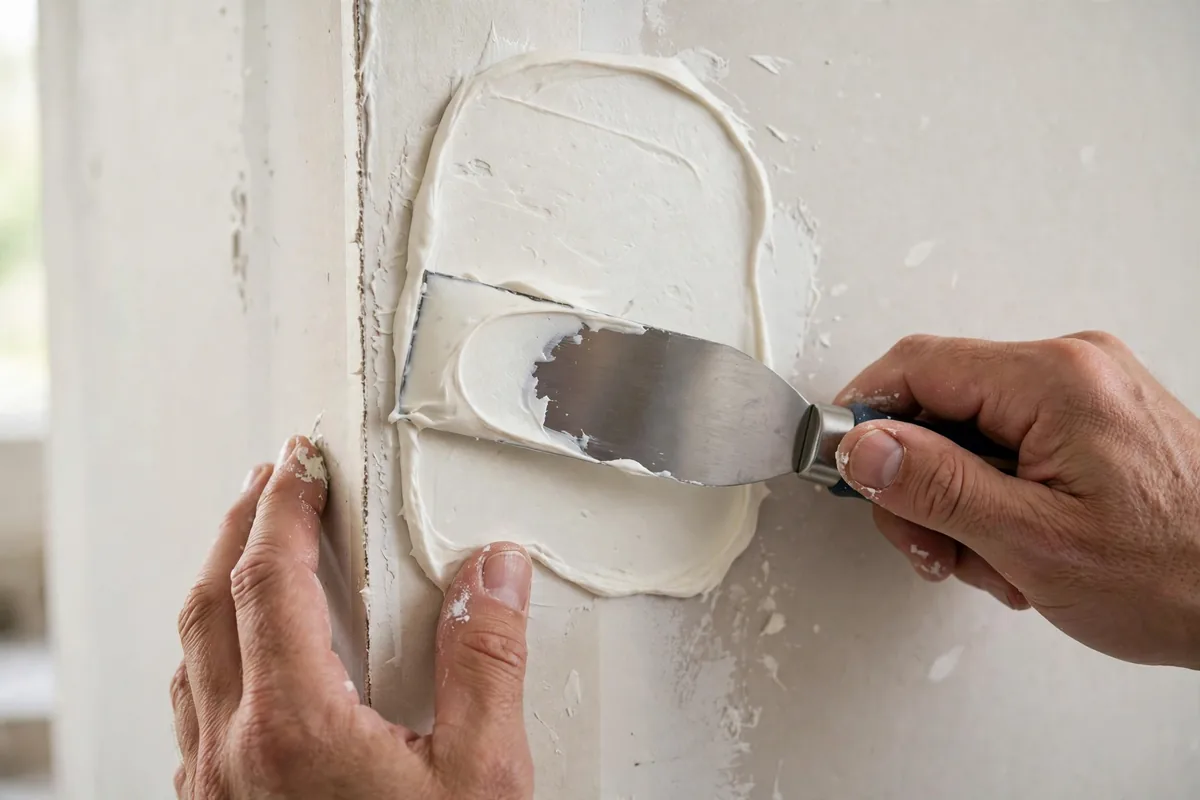
Stopping at Level 3 and painting it smooth. Level 3 is for texture. Under flat paint in daylight, every seam and fastener spot telegraphs through. If the plan is smooth paint, finish to Level 4.
Sanding too aggressively. Beginners sand through the paper face of the drywall around the joints, which creates a fuzzy spot that drinks paint differently forever. Sand the compound, not the paper. When the joint feels flush, stop.
Using the wrong mud for the coat. Setting type compound for filling and first coats, all purpose or topping for finish coats. Topping compound sands like a dream and has no strength, so it does not belong in deep fills.
No dust control. Drywall dust is incredibly fine and gets everywhere. Seal the room with plastic, wear a real respirator, and sand with a vacuum attachment if you have one. Your lungs and your HVAC filter will thank you.
Painting before priming. Fresh compound and fresh paper absorb paint at different rates. Skip the primer and the joints flash through the first coat like a map. One coat of drywall primer is not optional.
Rushing the dry time between coats. Each coat needs to dry fully, usually 24 hours, before the next. Recoating damp mud traps moisture and the finish suffers. Cold damp rooms take longer. Plan the schedule around drying, not around your weekend.
Frequently asked questions
How much does it cost to finish drywall per square foot? Typically 1.25 to 2.50 dollars per square foot for a Level 4 finish, labor plus materials, in 2026. That is the national drywall finishing cost per square foot range. Level 5 adds 0.75 to 1.50 more.
How much does it cost to tape and mud drywall? Taping and mudding alone, without hanging, typically runs 0.35 to 1.10 dollars per square foot depending on the finish level. That covers tape plus three coats and sanding. Materials add only pennies per foot on top.
What is the difference between Level 4 and Level 5 drywall finish? Level 4 is tape plus three coats, sanded smooth: the standard paint ready finish. Level 5 adds a full skim coat over the entire surface to erase any texture differences between the paper and the compound. It is specified for gloss paint, dark colors, and harsh lighting. So the level 4 vs level 5 drywall call comes down to light and paint choice, not wall size.
How long does drywall finishing take? A pro crew does a single room in 3 to 5 days across three coats plus sanding, because each coat needs about 24 hours to dry. A DIY first timer should plan two to three weekends for the same room.
Can I paint directly on finished drywall? Only after priming. Use a dedicated drywall primer first, then your paint. Skipping primer causes joint flashing, where the seams show through the paint.
Is Level 5 worth it? In rooms with big windows, glossy or dark paint, or critical side lighting, yes. In a normal bedroom with eggshell paint and soft light, Level 4 done well is indistinguishable and costs much less.
How much joint compound do I need per square foot? Roughly 1 gallon of ready mixed compound per 100 square feet of wall for a full Level 4 finish across three coats. A 12 by 12 room needs about 5 gallons, which is one 5 gallon bucket.
Skip the math next time
Our free Paint Calculator does all of this instantly — gallons, liters, and cost.
Try the Paint Calculator →