November 1, 2026 · 8 min read
How Many Fence Posts Do You Need? Spacing, Count, and Concrete Math
Fence post guide with the real math: the spacing formula, the plus one rule everyone forgets, post depth by fence height, and concrete per hole with a full 120 foot worked example.
Fence posts are the skeleton of the whole project. Pickets get the attention, but it is the posts, buried in concrete below the frost line, that decide whether your fence is still straight in five years or leaning like it had a long night. And posts are exactly what people underbuy, because the counting math has one sneaky step that trips up nearly every first time builder.
This guide covers the full calculation: how many posts your run needs, what spacing to use, how deep to set them, and how much concrete goes in each hole. If you want the whole material list at once, our fence calculator builds it from your fence length in seconds, but read the plus one section first, because that is where the money mistakes happen.
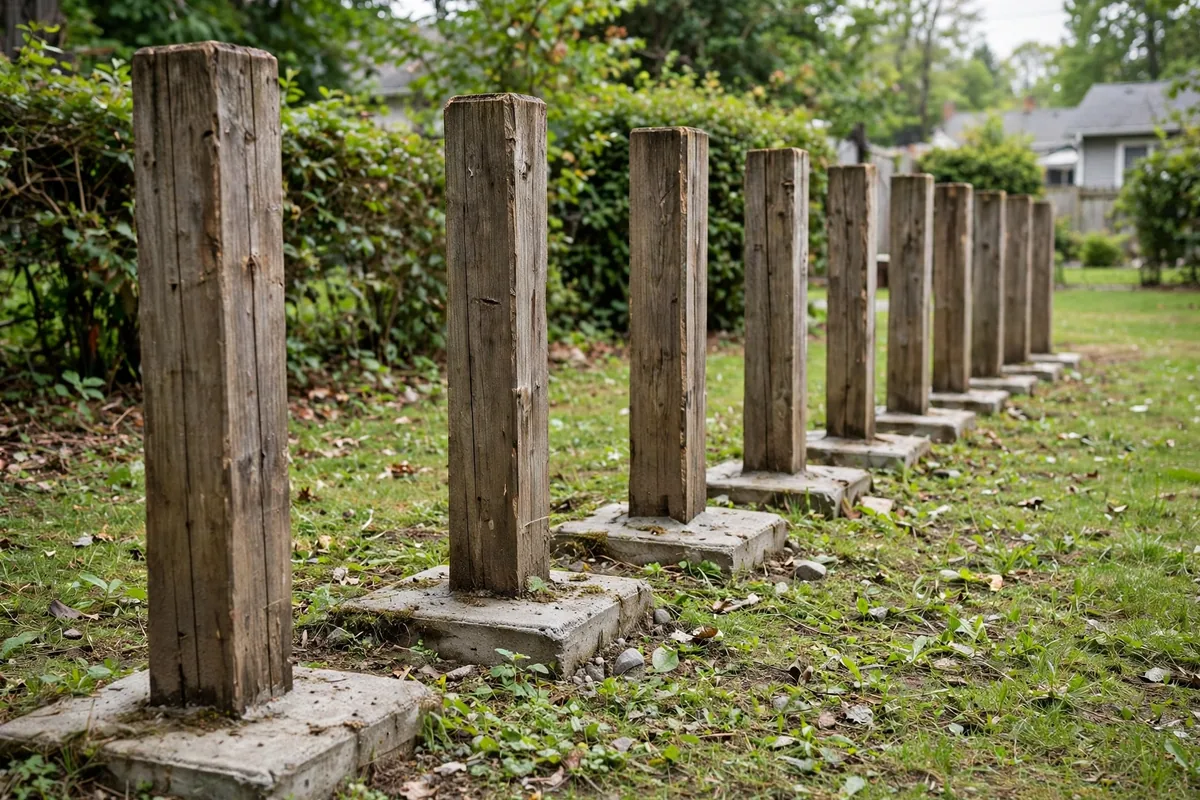
The post count formula
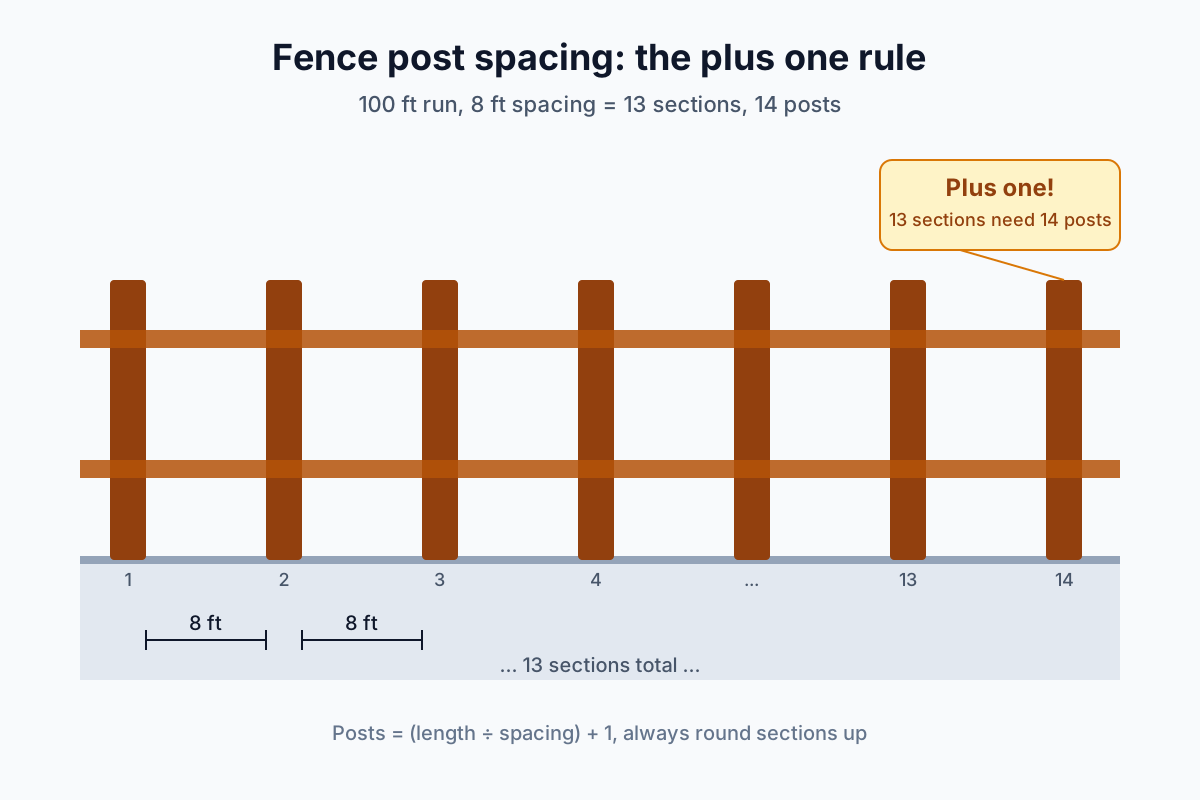
Posts go at regular intervals along the run, with one post at each end. The formula is:
Posts = (Total feet / spacing) + 1
That plus one is the part people forget. A 100 foot run with 8 foot spacing gives 100 / 8 = 12.5, which rounds up to 13 sections. Thirteen sections need 14 posts, because every section has two ends and the sections share posts in the middle. Skip the plus one and you are exactly one post short on concrete day, which is a special kind of annoying.
Round the sections up, never down. A 90 foot run at 8 foot spacing is 11.25 sections, so you build 12 sections with 13 posts. The last section ends up a little shorter than 8 feet, which is fine and normal. Real fence lines are rarely exact multiples of 8.
Fence post spacing: what to use
Fence post spacing depends on the fence type, the height, and how much wind your yard catches:
Wood privacy fence, 6 feet tall: 8 feet on center is the standard. It balances post cost against rail span, and it matches 8 foot rails and standard lumber lengths.
Tall fences or high wind areas: 6 feet on center. A 7 or 8 foot fence catches a lot of wind, and shorter spans keep the rails from bowing between posts over time. If your neighbor's fence waves in storms, this is probably why.
Chain link fence: 10 feet on center is typical, since the mesh comes in long rolls and the line posts are lighter duty.
Vinyl fence: follow the manufacturer's panel width, usually 6 to 8 feet. Vinyl systems are engineered around their own spacing, so do not improvise here.
When in doubt, go tighter rather than wider. An extra post costs a few dollars. A sagging rail section costs a weekend.
Corner posts, end posts, and gates
Not all posts are equal. Three spots need stronger posts than the rest of the line:
Corner posts take pull from two directions, so use 6x6 posts at corners even if the line posts are 4x4. End posts take the tension of the whole run pulling one way. Gate posts carry the gate's weight plus the daily slam, so they deserve 6x6 posts set deeper than the rest, in wider holes with more concrete.
Count 2 posts per gate, and do not try to share a gate post with the regular spacing. Gates need their own dedicated posts, set plumb and given extra cure time before you hang anything heavy on them. A sagging gate is almost always a gate post problem, not a gate problem.
How deep to set fence posts and how much concrete per hole
The old rule is one third of the post underground: a 6 foot fence gets 2 feet of burial minimum. In cold climates the frost line overrules everything, because frost heave will push a shallow post straight up out of the ground over winter. Our fence post depth guide walks through frost depth by region, but the short version is 30 to 36 inches deep covers most of the US, with northern states needing more.
Concrete per hole is cylinder math. A round hole's volume is:
Volume = 3.14 x radius x radius x depth (all in feet)
The post itself displaces some of that volume, so subtract roughly 0.2 cubic feet for a 4x4 post. Then convert to bags using the yield on the bag:
50 lb bag: about 0.375 cubic feet 60 lb bag: about 0.45 cubic feet 80 lb bag: about 0.6 cubic feet
Bigger holes eat dramatically more concrete, because volume grows with the square of the radius. A 12 inch diameter hole holds more than twice the concrete of an 8 inch hole at the same depth. Dig neat holes. Every extra inch of slop is money.
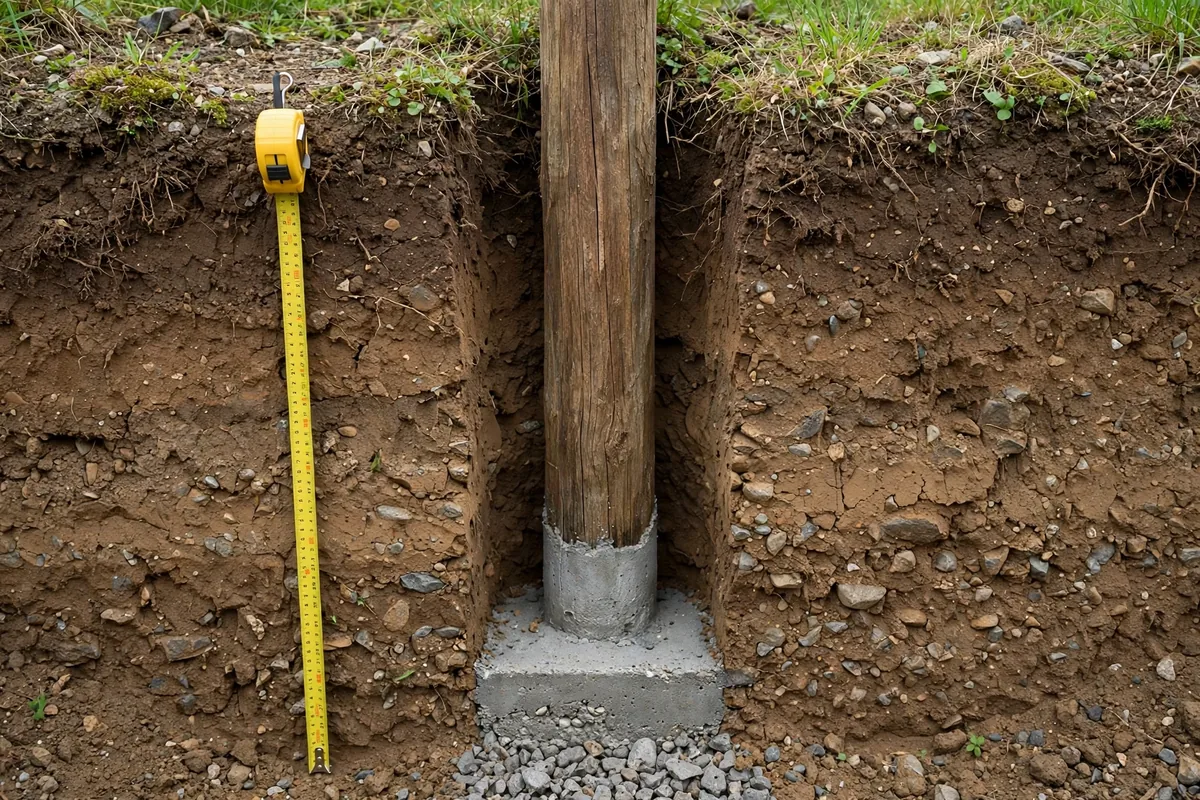
Worked example: a 120 foot privacy fence with one gate
Let us run a real one. A 120 foot backyard run, 6 foot cedar privacy fence, 8 foot post spacing, one 4 foot gate, holes 12 inches in diameter and 30 inches deep.
Post count: 120 / 8 = 15 sections exactly, so 15 + 1 = 16 line posts. Add 2 dedicated gate posts (6x6). Total: 18 posts.
Hole volume: 12 inch diameter means 6 inch radius, which is 0.5 feet. Depth 30 inches is 2.5 feet. Volume = 3.14 x 0.5 x 0.5 x 2.5 = 1.96 cubic feet per hole. Minus post displacement of about 0.2 = 1.76 cubic feet of concrete per hole.
Bags: using 60 lb bags at 0.45 cubic feet each, 1.76 / 0.45 = 3.9, so 4 bags per hole. Total concrete: 18 holes x 4 bags = 72 bags of 60 lb concrete.
Quick reference, 60 lb bags per hole (always round up):
| Hole size | Bags per hole |
|---|---|
| 8 in wide, 24 in deep | 2 |
| 10 in wide, 30 in deep | 3 |
| 12 in wide, 30 in deep | 4 |
| 12 in wide, 36 in deep | 5 |
At a typical 2026 price of about 5.50 dollars per 60 lb bag, that is 72 x 5.50 = 396 dollars, call it 400 dollars for concrete. Posts: sixteen 4x4x8 pressure treated posts at roughly 14 dollars each is 224 dollars, plus two 6x6x8 gate posts at roughly 30 dollars each is 60 dollars. Posts plus concrete lands around 684 dollars before pickets, rails, and hardware. That is the structural core of the fence, priced from measurements instead of guesses. Our concrete bag calculator runs the same hole math for any diameter and depth if your numbers differ.
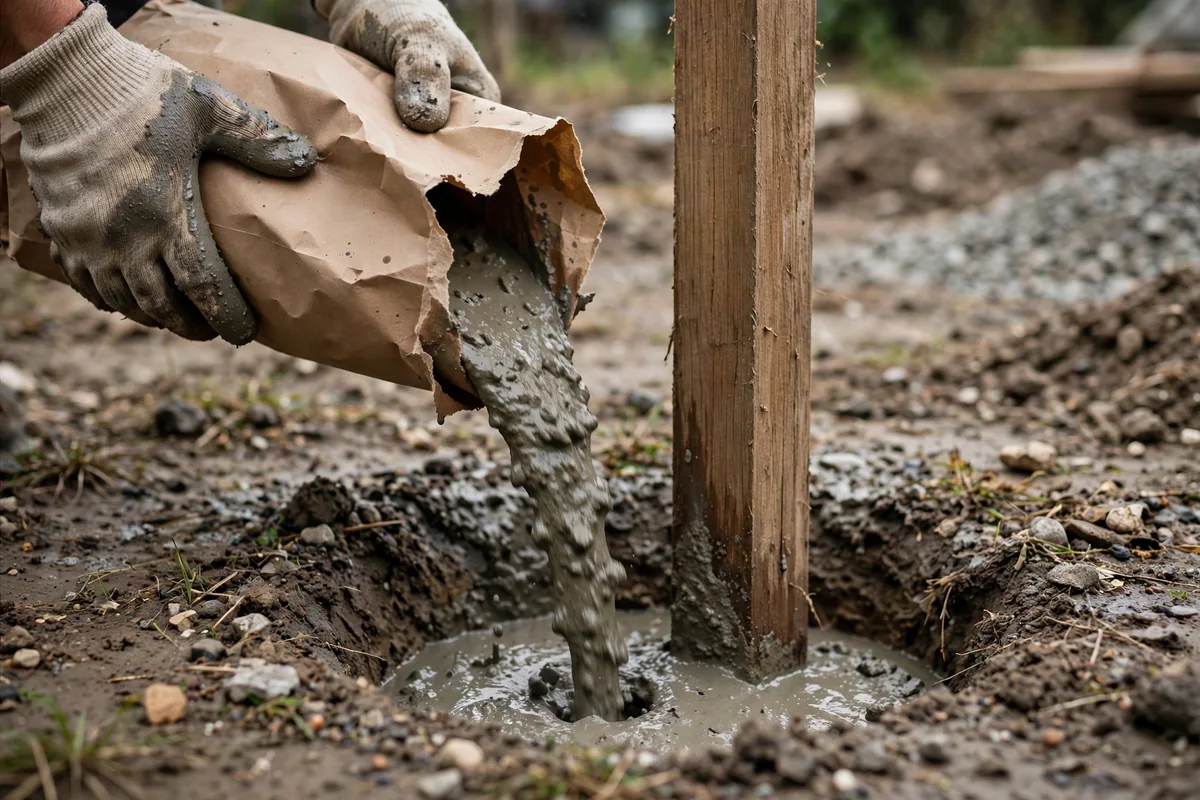
Mistakes that waste a weekend
Forgetting the plus one. It is the most common post math error in existence. Write the formula down, circle the plus one, and count again.
Spacing posts 10 feet apart on a wood fence to save money. The rails will sag within two seasons and the fence will look tired long before its time. Eight feet is the standard for a reason.
Setting posts at 24 inches deep in frost country. The fence looks great in October and leans by March. Check your local frost depth and dig below it, every hole, no exceptions.
Eyeballing the concrete. "About a bag per hole" works for small holes and fails for big ones. Run the cylinder math. On an 18 post fence, the difference between guessing and calculating can be 20 bags.
Hanging the gate the same day you pour. Concrete needs time. Give gate posts at least 48 hours, ideally longer, before hanging any real weight on them. The rest of the fence can take rails sooner, but gates are unforgiving.
Skipping the utility locate. Call 811 before you dig, anywhere in the US. It is free, it is the law in most states, and a gas line does not care about your weekend plans.
Frequently asked questions
How far apart should fence posts be? Eight feet on center for a standard 6 foot wood privacy fence. Use 6 feet for tall fences or windy sites, 10 feet for chain link, and the manufacturer's panel width for vinyl.
How many posts do I need for 100 feet of fence? At 8 foot spacing: 100 / 8 = 12.5, round up to 13 sections, plus one = 14 posts. Add 2 per gate.
How deep should a 6 foot fence post be? The rule for how deep should fence post holes be: bury one third of the post's above ground height, with 24 inches as the minimum. For a 6 foot fence that means 24 inches at the bare minimum, with 30 to 36 inches the safer target in most of the US. In cold climates, dig below the local frost line regardless.
How many bags of concrete per fence post? It depends on hole size. A 12 inch diameter hole 30 inches deep needs about 4 sixty pound bags. A 10 inch hole 24 inches deep needs about 2 to 3 fifty pound bags. Asked another way, how much concrete per fence post: figure 1 to 2 fifty pound bags for typical residential holes, more for wide or deep ones. Run the cylinder formula for your exact hole.
Should fence posts be set in concrete? For gates, corners, and frost zones, yes. Concrete is the reliable choice there. In well draining soils you can tamp crushed stone around a post instead, and it drains better than concrete, but it takes more care to get the post plumb and tight. When in doubt, pour.
Should gate posts be bigger? Yes. Use 6x6 posts for gates, set them deeper than line posts, in slightly wider holes, and let the concrete cure at least 48 hours before hanging the gate.
Can I set posts without concrete? In some soils you can tamp crushed stone around a post, and it drains better than concrete. But for gates, corners, and frost zones, concrete is the reliable choice. When in doubt, pour.
Skip the math next time
Our free Paint Calculator does all of this instantly — gallons, liters, and cost.
Try the Paint Calculator →