November 1, 2026 · 7 min read
Fence Stain Calculator: How Much Stain You Need for Both Sides
Fence stain calculator guide: coverage rates by wood type, the both sides math everyone forgets, sprayer versus brush waste, and a full 150 foot cedar fence worked example with 2026 costs.
Staining a fence is area math wearing a disguise. The fence stain formula looks simple, but three traps are built into it: most people forget the second side, they use the smooth wood coverage rate on rough wood, and they buy the exact calculated gallons with nothing left for touch ups. Fix those three and the rest is just arithmetic.
This guide walks through real coverage rates, the full calculation for both sides of the fence, how your applicator changes the number, and what it should cost in 2026. If you just want the fast version, our paint calculator uses the same area math and works fine for stain, but read the coverage section first, because stain and paint do not cover the same.
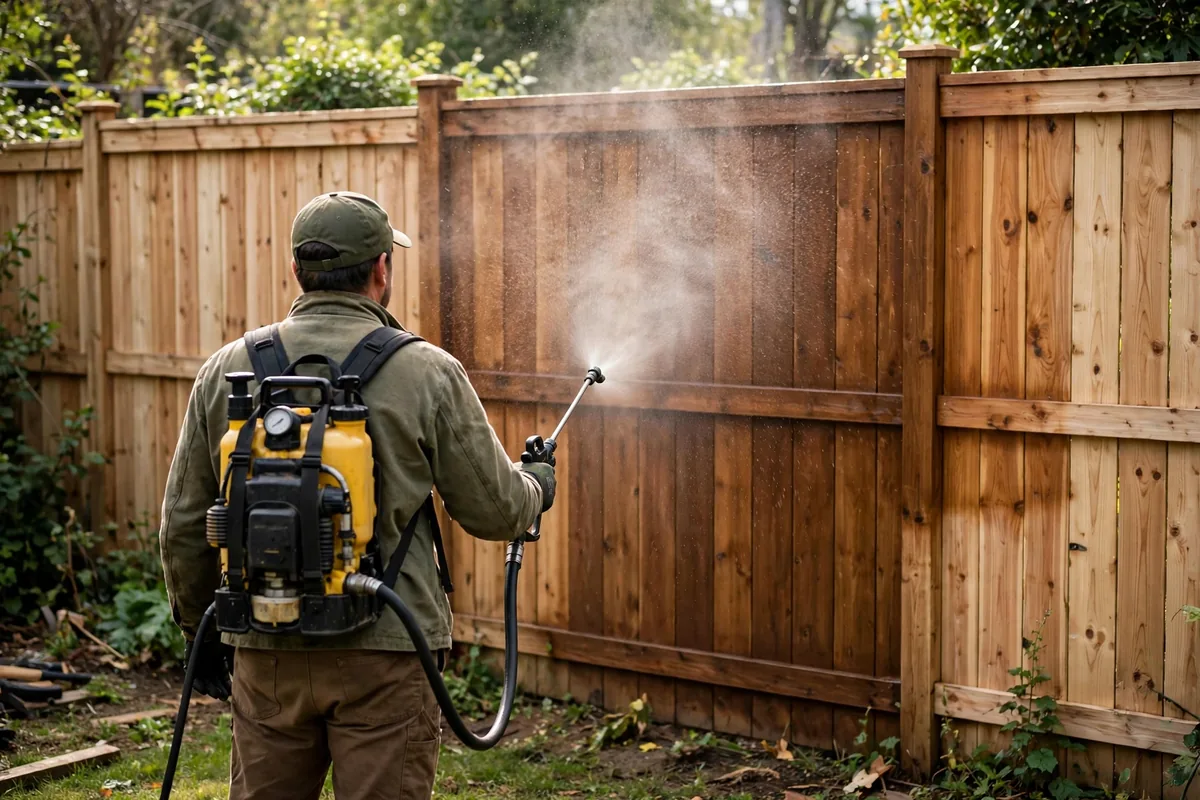
Fence stain coverage: the numbers that matter
Fence stain coverage per gallon is printed on the can as a range, and the range is wide because wood varies enormously. Use these realistic figures:
Smooth planed wood, second coat: 200 to 250 square feet per gallon Rough sawn cedar or pine, first coat: 100 to 175 square feet per gallon Weathered gray wood, first coat: as low as 80 to 120 square feet per gallon
Coverage at a glance, both coats:
| Wood condition | First coat (sq ft per gallon) | Second coat (sq ft per gallon) |
|---|---|---|
| Smooth planed pine or cedar | 175 to 225 | 200 to 250 |
| Rough sawn cedar or pine | 100 to 175 | 175 to 225 |
| Weathered gray wood, never sealed | 80 to 120 | 150 to 200 |
Read your row, then do the both sides math from the next section. If your fence is between conditions, use the thirstier number. Running short mid project is worse than having half a pail left for touch ups.
The pattern is simple: rougher and thirstier wood drinks more. A brand new smooth pine fence sips stain. A five year old weathered cedar fence that has never been sealed will drink the first coat like it is dying of thirst, then behave normally on the second.
Two coats is the standard for a fence that needs to last. The first coat soaks in and seals, the second builds the color and the UV protection. Budget both coats from the start. Planning for one coat and "seeing how it looks" is how fences end up patchy, because the second coat never happens.
The both sides trap
Here is the mistake that ruins more stain budgets than any other: calculating one side of the fence.
Total square feet = length x height x 2
A 150 foot fence that is 6 feet tall is not 900 square feet of staining. It is 1,800. Both sides weather, both sides need protection, and your neighbor's side counts whether you like your neighbor or not. Some people split the cost with the adjoining neighbor, which is a fine arrangement, but the stain math does not care who pays. It is still two sides.
Do not forget the posts and rails either, strictly speaking. In practice, the picket faces dominate the area so completely that posts and rails disappear into the waste allowance. But if your fence has a lot of exposed framing, a lattice top, or decorative caps, add 10 percent for the extra surface.
Sprayer, roller, or brush: how your applicator changes the number
A pump sprayer is the fastest way to stain a fence and the thirstiest. Overspray, bounce back, and the general enthusiasm of a sprayer add roughly 10 to 20 percent to your material use compared to brushing. The pros back brush after spraying, which means the speed advantage is real but the material savings are not.
A roller or pad applicator sits in the middle: faster than a brush, less waste than a sprayer. A brush is the slowest and the most economical with material, and it works stain into the grain best on rough wood.
Whatever you use, add a 10 percent waste allowance on top of the calculated gallons. Between the bottom of the can, the brush cleanup, the board you have to recoat because a cloud moved, and the touch ups next spring, the allowance always gets used.
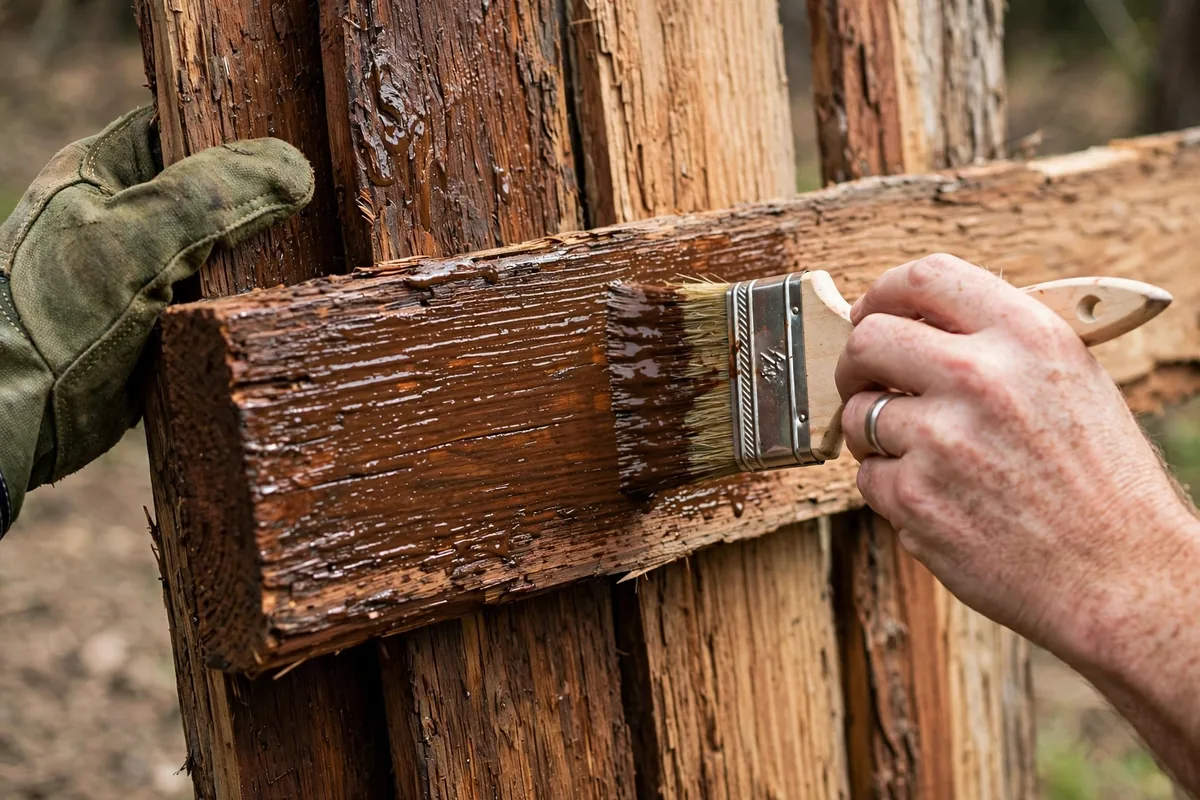
Worked example: a 150 foot cedar fence, both sides, two coats
Let us run a real one. A 150 foot run of 6 foot rough sawn cedar privacy fence, both sides stained, two coats, applied with a sprayer.
Area: 150 x 6 x 2 = 1,800 square feet. Coverage: rough cedar first coat at 150 square feet per gallon. 1,800 / 150 = 12 gallons for the first coat. Second coat on sealed wood covers better, about 200 square feet per gallon. 1,800 / 200 = 9 gallons for the second coat. Subtotal: 21 gallons. Add 10 percent for sprayer waste and touch ups: 21 x 1.10 = 23.1 gallons.
Buy it in 5 gallon pails: 23.1 / 5 = 4.6, so five 5 gallon pails, which is 25 gallons. That leaves you just under 2 gallons for spring touch ups, which is exactly where you want to be.
Cost: fence stain cost per gallon runs about 20 to 50 dollars in 2026. At a typical 40 dollars per gallon for decent semi transparent fence stain: 25 x 40 = 1,000 dollars for material. Budget pails and premium brands move that 35 to 60 dollars per gallon, so the realistic range for this fence is 875 to 1,500 dollars in stain alone. That is the whole job priced from measurements. Our exterior paint coverage guide uses the same per gallon logic for house siding, if you are doing both projects in one season.
When to stain: timing matters as much as math
New pressure treated wood needs 2 to 4 weeks of dry weather before it will take stain evenly. Stain applied to wet treated lumber sits on the surface, looks blotchy, and peels within a year. The sprinkle test is the honest check: flick water on the wood, and if it beads up, the wood is not ready. If it soaks in within a few minutes, you are good.
Stain in mild dry weather, ideally 50 to 90 degrees, with no rain for 24 to 48 hours after application. Never stain in direct midday sun if you can avoid it. Hot boards flash dry the stain before it penetrates, which gives you surface color with no depth and a shorter life. Morning shade or an overcast day is the pro move.
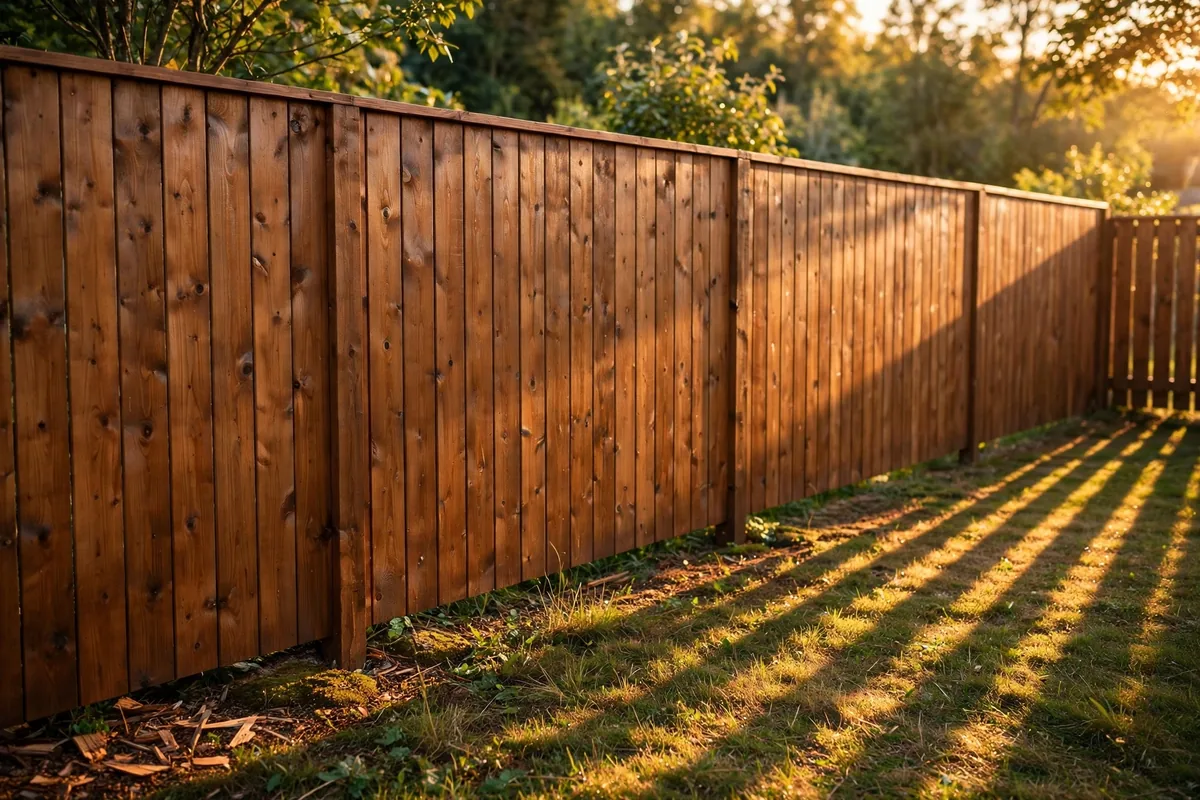
Mistakes that show up in year two
Calculating one side. We covered it, but it bears repeating because it is the number one stain budgeting error. Length times height times two. Every time.
Using the smooth wood coverage rate on rough wood. The can says "up to 250 square feet per gallon" in big letters and whispers the rough wood number in small print. Use the number that matches your actual fence.
Staining wet or brand new treated lumber. The stain cannot penetrate, so it forms a film that fails. Wait the weeks. Do the sprinkle test.
One heavy coat instead of two proper coats. A single thick coat looks done on day one and cracks by year two. Two moderate coats always outlast one heavy one.
Staining in the rain window. A surprise shower 6 hours after application can spot and streak a whole section. Watch the forecast for a clear 48 hour stretch.
Buying the exact gallons. There is no stain store run at 7 pm on a Sunday when you are 2 gallons short with the sprayer clogged. The 10 percent allowance is not optional.
Frequently asked questions
How much fence stain do I need per linear foot? For a 6 foot fence stained both sides at typical coverage, roughly 1 to 1.5 gallons per 10 linear feet for two coats. A 150 foot fence needs about 23 to 25 gallons.
How much stain for a 100 ft fence? A 100 foot long, 6 foot tall fence is 600 square feet per side, 1,200 for both sides. Two coats at typical coverage works out to about 12 gallons. Buy three 5 gallon pails and you will have touch up material left over.
Semi transparent vs solid stain: which should I use? Semi transparent soaks into the wood and shows the grain, lasting 3 to 5 years on a fence. Solid stain sits on top more like thin paint: it hides the grain, lasts longer, but it can peel and it looks less like wood. For cedar with good grain, semi transparent is the classic pick.
Does a sprayer use more stain than a brush? Yes, about 10 to 20 percent more due to overspray. It is still usually worth it for the speed on a long fence. Back brushing after spraying gives the best finish.
How long does fence stain last? Three to five years for semi transparent stain on a vertical fence in most climates, longer on the shaded side, shorter on the sun blasted side. Solid stain lasts longer but looks more like paint.
Can I stain over old stain? Yes, if it is the same type and the old coat is sound. Clean it thoroughly first and do a test board. Switching from oil based to water based, or the reverse, usually needs a full strip.
Should I stain both sides of a fence? For the wood's sake, yes. The unstained side weathers, grays, and eventually rots while the stained side looks fine. For the math, always calculate both sides.
How soon can I stain a new fence? For cedar or redwood, as soon as the wood is dry, often within days. For pressure treated pine, wait 2 to 4 weeks of dry weather and pass the sprinkle test first.
If you are pricing the whole fence project and not just the stain, our fence calculator totals up posts, pickets, rails, and concrete alongside the finish, so the stain number lands in a complete budget instead of floating alone.
Skip the math next time
Our free Paint Calculator does all of this instantly — gallons, liters, and cost.
Try the Paint Calculator →